Title
Contemporary Challenges in Higher Education: Strengthening Foundational Competencies, Assessment Reforms, and Socio-emotional Learning through Contextual and Inclusive Approaches
उच्च शिक्षा में समकालीन चुनौतियाँ: आधारभूत दक्षताओं का सशक्तीकरण, मूल्यांकन सुधार तथा सामाजिक-भावनात्मक अधिगम (SEL) को संदर्भित एवं समावेशी दृष्टिकोणों के माध्यम से बढ़ावा
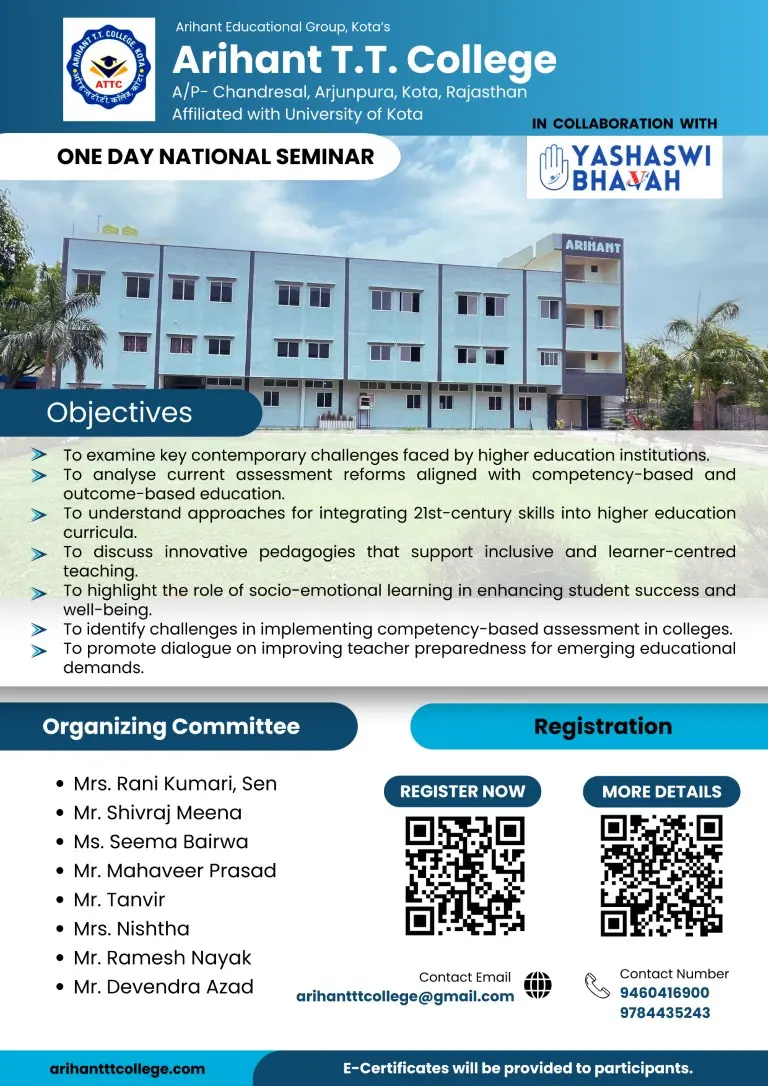
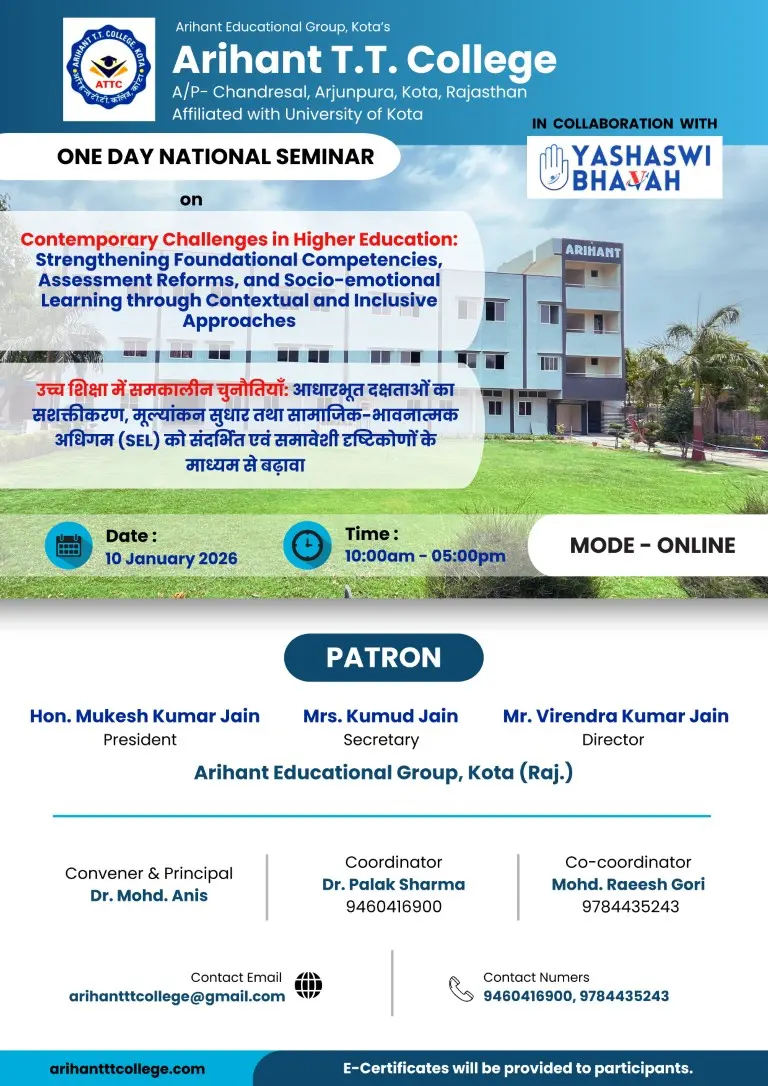
| What | One Day National Level Seminar on “Contemporary Challenges in Higher Education: Strengthening Foundational Competencies, Assessment Reforms, and Socio-emotional Learning through Contextual and Inclusive Approaches” |
| Level | National Level |
| Duration | 1 Day |
| When | 10th January 2026 |
| Time | 10 AM – 5 PM |
| Where | Online Mode |
| Organizers | Arihant T. T. College, Kota In Collaboration with Yashaswi Bhavah, MH |
Brief Report of the Event
The One-Day National Level Online Seminar was organised successfully by IQAC, Arihant T. T. College, Kota, with active participation from academicians and educators across different states of India.
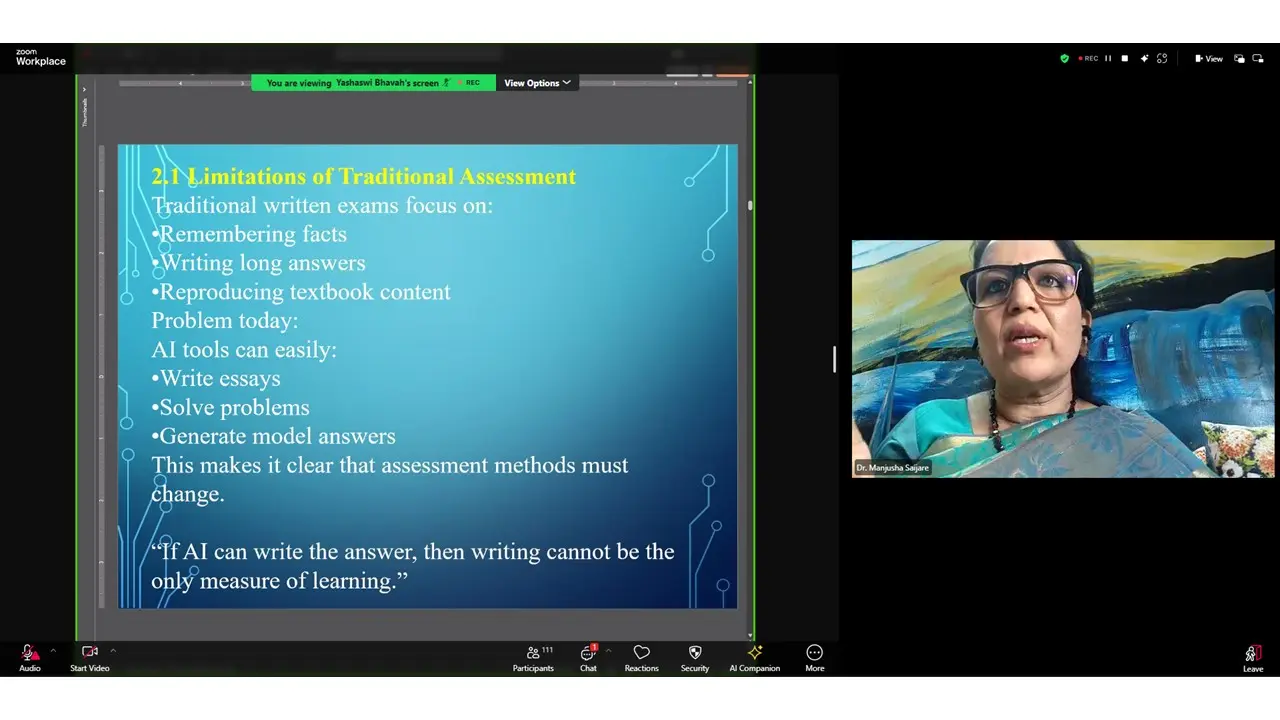
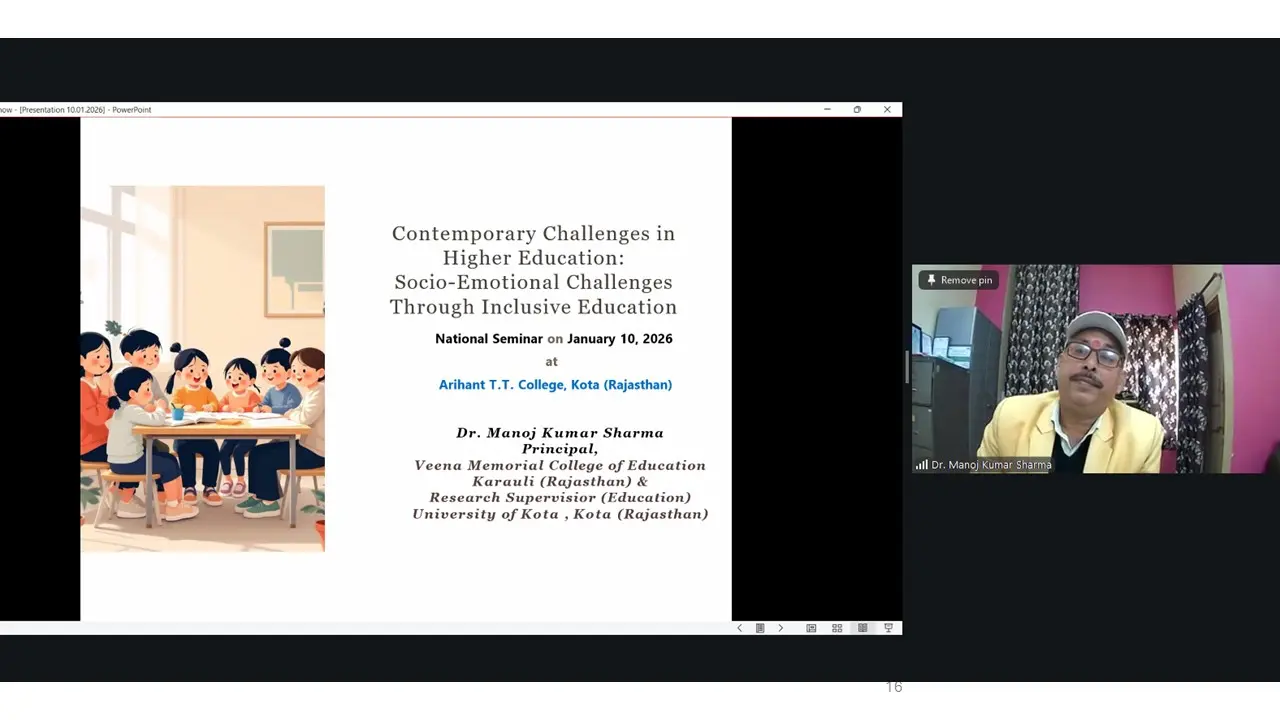
The inaugural session highlighted the importance of addressing contemporary challenges in higher education, particularly in the context of NEP-2020. Each technical session provided valuable academic insights into digital transformation, ICT integration, socio-emotional learning, and competency-based assessment.
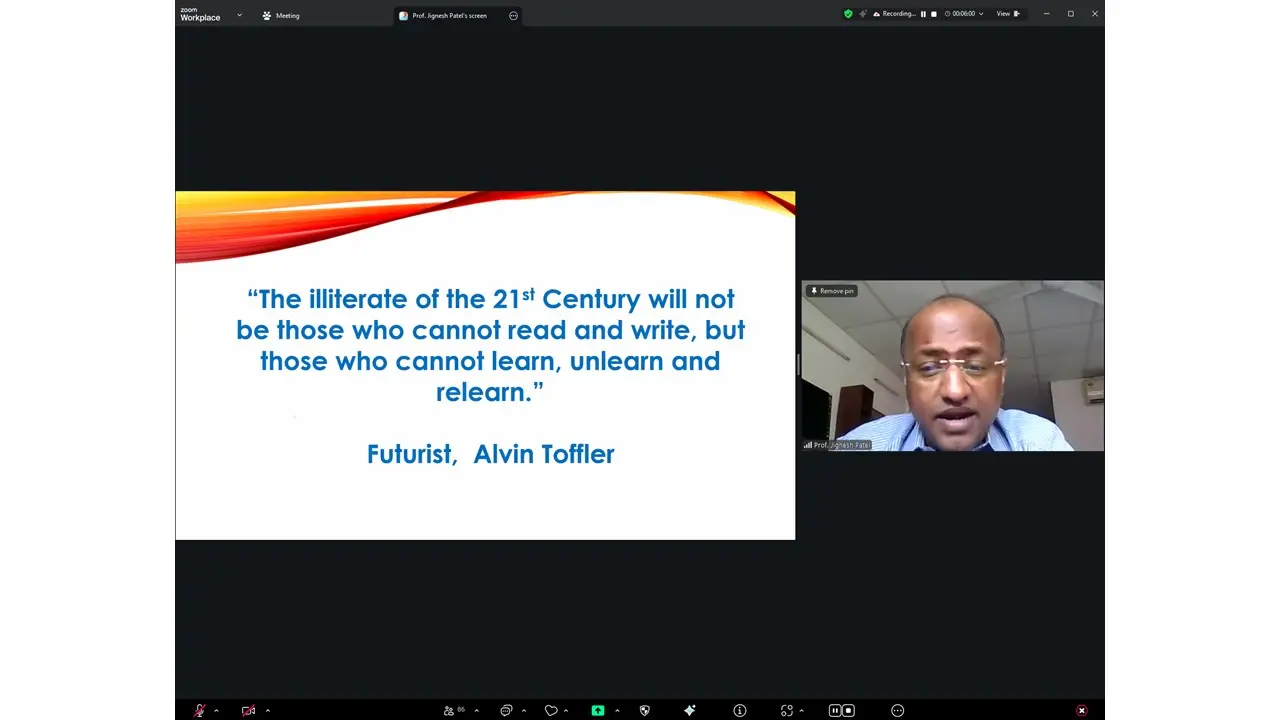
The resource persons elaborated on practical strategies, policy implications, and innovative pedagogical practices. The sessions were interactive, and participants actively engaged through question-answer discussions.
The valedictory session summarised the key learning outcomes and emphasised the need for continuous professional development among teacher educators.
Outcome of the Seminar
- Enhanced understanding of NEP-2020 reforms among participants.
- Improved awareness about competency-based assessment and digital pedagogy.
- Strengthened perspectives on inclusive education and socio-emotional learning.
- Academic networking among institutions and educators at the national level.
- Professional enrichment of faculty and students.
Number of Participants
More than 252 participants attended the seminar from various higher education institutions.
Feedback and Evaluation
Participant feedback was collected online through a structured feedback form. The overall feedback indicated high satisfaction regarding content relevance, quality of resource persons, and organisation of the seminar. E-certificates were issued to all registered participants within one week.
Conclusion
The One-Day National Level Online Seminar proved to be academically enriching and professionally meaningful. The programme successfully met its stated objectives and contributed significantly to faculty development and quality enhancement initiatives of the institution.